|
Elaine Willman Biography |
|
|
|
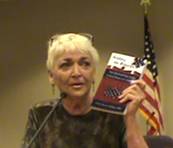
ELAINE WILLMAN, MPA, Tribal law expert Elaine Devary Willman, MPA is the author of Going To Pieces…the dismantling the United States of America, first published in 2005. The book reports on first person visits and experiences of tribal members and citizens residing on or near seventeen Indian reservations during her extensive road trip across the country from Washington State to New York State. Going to Pieces…continues to be a best-seller, some eleven years later, and is now available in a Second Edition, inclusive of an Index, in book stores and on all major book website. Subsequent to her two year attendance at Ventura College of Law, Ms. Willman received a Masters degree in Public Administration from Cal State University in 1991, and has obtained 96 credits towards her doctoral work in public policy. Having lived in Western States for over thirty years, and within two Indian reservations for more than twenty years, Ms. Willman has extensive knowledge about federal Indian policy, land use status within Indian reservations, dual-jurisdiction and Constitutional conflicts that impact the rights and lives of tribal members as well as other American citizens. Ms. Willman’s mother and grandmother were enrolled Cherokee members; her spouse is of Shoshone ancestry, and is a direct descendant of Sacajawea. She served as National Chair of Citizens Equal Rights Alliance (CERA) from 2001 – 2007 and remains an active CERA Board Member. Mrs. Willman has blended her local land use and strategic planning expertise with federal Indian policy to inform and engage counties, towns and citizens that are co-located within or near federally recognized Indian reservations. From 2008 -2015 Ms. Willman served the Village of Hobart, Wisconsin, as their Director of Community Development and Tribal Affairs. Hobart, incorporated in 1908 after the Oneida Tribe of Indians reservation was fully allotted, is entirely co-located within the historical boundaries of this former reservation. In July 2015 Ms. Willman moved to the Flathead Indian Reservation to assist western Montana landowners defend against a federal/tribal/state taking of water rights from landowners, transfer of a public hydropower dam to become a private tribal government asset, and loss of all control of water access or rate setting, deeply imperiling the entire food production in this agriculture-dependent region. In March of 2016, Ms. Willman published a reference manual for community leaders and elected officials, now available in stores and online as well. The reference manual is entitled, Slumbering Thunder…a primer for confronting the spread of federal Indian policy and tribalism overwhelming America. 2020 TNA Magazine: "Federally funded tribal governments are being used as a battering ram against the U.S. Constitution, state sovereignty, and individual liberty, Indian policy expert and author Elaine Willman told The New American magazine's Alex Newman. In her new book American Tribal Tyranny, Willman lays it all bare. She gives insight into the new Supreme Court ruling on Oklahoma, and explains how the federal government's complex and unconstitutional Indian policy mess is helping destroy the nation." Ms. Willman is available for speaking engagements, workshop presentations or one-one-one consultations at any time. Contact: Phone: 509-949-8055 Email: toppin@aol.com
* VIDEO - Elaine Willman, former director of Tribal Affairs for Hobart, Wisconsin, explains how their tribe chose to turn their reservation into individual allotments, then later the government decided to reestablish their reservation boundaries. She was instrumental in saving the town from tax exempt tribal land acquisitions: Land Jurisdiction in the Village of Hobart, YouTube 6/16/15. Well worth watching if you live in the Klamath Basin. |