|
Our Refuges Klamath Basin National Wildlife Refuges Table of Contents Klamath Basin Wildlife Galleries Wildlife and Farmland HERE FOR AUDIO, President of California Waterfowl Association Ph. D. Robert McLandress, UC Davis ecology: "There are (433) species of wildlife here; the (biological) opinion deals with three..." Here in the Pacific Flyway, Klamath Basin is "...the most important waterfowl area in North America..." Waterfowl eat "...70 million pounds of food here...," and more than half comes from the farms.
Articles, editorials, letters and facts Ducks Unlimited awarded $2.6M for pumping stations in Klamath Basin (refuges), Capital Press 8/31/22. "Jeff McCreary, western region director of Ducks Unlimited, said the refuges today are historically dry. He called it a "crisis situation." KBC NOTE: Our refuges and farms are "historically dry" because the Bureau of Reclamation withheld from farmers 40,000 acre feet of our legally stored irrigation water in 2021, and presently shut off our water to Klamath Project farms while keeping in Klamath Lake 1 1/2' of our stored water ABOVE biological opinion mandates for suckers. The lake is 3' higher than it was historically before we built and paid for the Klamath Project. Klamath Lake and Klamath River are presently full. When water goes to the farms, it then fills the refuges then is diverted OUT of the Klamath Basin and into Klamath River.
KILLING SUCKERS:
The following comment was on our Klamath Basin
Crisis Facebook page:
November 2022 - From Matt
Brimmer 4
days ago in a discussion in this fb group regarding
suckers, hatchery, and draining Sump 1A : "Michael this
has been attempted on a couple different instances
since 2001 and has failed. I sat in on one of the
original meetings regarding a Sucker Hatchery. It
was set up on Lower Klamath Wildlife refuge towards
the Sterns Unit. It was working well until the Birds
found it and ate most of them! I also had the
opportunity to be part of the Team that assisted
with Sucker fish capture on the Caldona (Running Y)
marsh when the dike broke. This made for what the
ESA and the Tribes called the perfect Sucker
Habitat. However, I believe we only captured around
30-40 Suckers. Then let’s fast forward to
this year when TID with the assistance of Ducks
Unlimited and the Tulelake Basin Farmers drained
Sump 1A
(again supposed perfect sucker habitat). Multiple
Large Adult Breeding suckers were trapped however
were not allowed to be moved from 1A to Klamath
Lake. They were moved to Sump 1B where most were
found floating a few weeks later."
Evaporation, diversions increase botulism risk at Tule Lake, H&N 7/17/21. "Last month, biologists and irrigators drained Tule Lake’s largest unit of open water to mitigate avian botulism outbreaks on Tule Lake National Wildlife Refuge..."
*
Wish List for Suckers Nails Farms, USFWS proposal 1992 Wood River rancher sells water right to help downstream refuges, H&N 3/16/21. "The Wood River Valley rancher...proposed selling 4,500 acre-feet of his water right to the refuge...CWA is in the process of lobbying the federal government to eventually purchase the full 30,000 acre-feet, which could cost up to $60 million. That could easily be funded by Congress... a 30,000 acre-feet delivery would allow Lower Klamath to support an additional 3,000 acres of grain, 1,000 acres of pasture, 2,000 acres of permanent wetlands and 4,600 acres of other wetlands..." Go HERE for the previous 100,000 acres of agricultural land acquisition by the U.S. government: "One ranch at a time, Government agencies and TNC promised that these farm and ranch acquisitions would save water, improve water quality, benefit fish, and store water for the rest of the irrigators and put more water into the Klamath River. The opposite is true..." KBC NOTE: Our refuges were designed to receive water after it was pumped through the Klamath Reclamation Project. This amount was substantial until the government-mandated instream-required-water-for-fish skyrocketed. Water for fish = less or no water for birds and 489 species of wildlife, and farmers. Thus, when the Klamath Project gets it's full delivery, the runoff water goes to the refuges. This Project water historically was in a closed basin until Reclamation blasted a tunnel through Sheepy Ridge to supply Lower Klamath Refuge and keep farms from flooding. Pacific Power raised Project power rate more than 2000%, and U.S. Fish and Wildlife Service refuses to pay the $100's of thousands power costs for D Plant to pump water into Lower Klamath Refuges from the Project.
Klamath farmers confront dry year, legal challenge,
CFBF 3/24/2021. "...Environmental
groups challenged the plan's continued allowance of
leasing refuge lands for agriculture as inconsistent
with the refuges' purpose of waterfowl management.
Conversely, the Tulelake Irrigation District
challenged the new restrictions as inconsistent with
the Kuchel Act, which identifies agriculture as a
key purpose of the refuges...John
Crawford, president of the Tulelake Irrigation
District board of directors, farms on the refuge and
said he is proud of local farmers' contribution to
the waterfowl population...'We leave a tremendous
amount of grain standing there for ducks and geese
every year. Right now, there's thousands of geese
utilizing that standing grain that was left last
fall...' "...U.S. Bureau of Reclamation said it
anticipates it will not have enough water this
summer to meet minimum requirements for endangered
fish, let alone to fulfill irrigation demands." Farmers, ranchers can run Basin better than 'experts,' H&N letter to editor by David Hill, Merrill 9/13/2020. "...For more than 20 years now, the agriculture community have been the whipping boy for all the problems concerning the salmon, sucker and algae in the Klamath Lake Basin. So called “experts” from the U.S. Bureau of Reclamation, the tribes above and below the lake, fisheries personnel, a local MD, biologists and others have told us how to fix the problem: Fence the riparian area of all streams, remove 30-40,000 acres of productive farm ground along the lake, keep water levels high in lake, remove cattle or keep manure out of lake. All the above have been done and nothing works. Maybe the decline in suckers is due to the trophy trout population consuming the sucker fry or the cormorants and terns and other fish eating birds are responsible. Cormorants and terns are major factors with salmon fry in the Columbia River system... Reclamation announces more water for Klamath Project, refuges, H&N 9/6/2020 Reduce Klamath Cormorant population to save the fish, by Debbie Klaja for H&N 5/26/2020. "Has anything been done to reduce the number of fish-eating Cormorants? It seems everyone thinks the problem with no surviving baby sucker fish is the water level..." KBC NOTE: See our Refuge Page articles for more on fish-eating Caspian Terns lured to Tulelake and Lower Klamath refuges on million-dollar, FWS-made islands from eating baby salmon. Now baby suckers? Scroll down for more Caspian Tern information
Environmentalists and farmers lose lawsuits over Klamath
refuges, Capital Press 4/22/2020. "The
agricultural plaintiffs argued these burdens would
threaten the viability of farming and interfere with a
federal law governing leases of refuge lands." Lower Klamath refuge to start getting water, KWUA 9/5/19. “Even in a year with 130 percent of average precipitation, we still did not have a full allocation to the Project,” said Klamath Irrigation District Manager Gene Souza. "The ESA requirements for fish are overwhelmingly the biggest risk to the water needs of the Refuge as well as the Project.”
TID pumping water to Lower Klamath Refuge, H&N
2/19/19,
FOLLOWED BY:
Oregonians for Food and Shelter Legislative Review 1/11/19. Bans neonicotinoids, aerial pesticide prohibition, forest practice bans, dairy size prohibitions and regulations, Articles: Carbon Cap, Wolf talks, Klamath Refuge Management Attacks, Walden townhalls. Comments due July 6 for Klamath refuges acquiring irrigator's water USFWS releases water from the refuge, H&N, 3/29/18. Fish & Wildlife weighs drawdown of 10k acre feet from lower refuge, H&N 3/13/18
Farming inside refuges transforms Klamath Basin agriculture, H&N by OPB 7/28/17 Irrigators file lawsuit over Klamath refuge restrictions, H&N from Capital Press 4/13/17. "The Tulelake Irrigation District, Klamath Water Users Association, Tulelake Growers Association and three private farms have now filed a complaint against the agency, arguing that plans for the Tule Lake and Lower Klamath refuges violate federal laws." ***FINAL Plan for Klamath Basin National Wildlife Refuges, available for public review, 12/9/16. It deals with acquiring more water, the KBRA, climate change, whether farming is compatible with refuges...
US Fish and Wildlife Service: Klamath Basin
leaseland farming on the refuges with hundreds of
new proposed regulations that would shut down
leaseland farming.
COMMENT PERIOD is extended to August 4th. Follow
this link for FWS documents >
https://www.regulations.gov/docketBrowser?rpp=25&so=DESC&sb=commentDueDate&po=0&dct=SR&D=FWS-R8-NWRS-2016-0063
*
COMMENTS DUE JUNE 20:
Notice of Availability of
Draft Comprehensive Conservation Plan/Environmental Impact
Statement on Lower Klamath, Clear Lake, Tule Lake, Upper
Klamath, and Bear Valley National Wildlife Refuges, Klamath
County, OR; Siskiyou and Modoc Counties, CA
Refuges seeking contracts with farmers by April 3rd. Agreements are crop share and growers are responsible for all growing costs, H&N 3/26/15 * Tule Lake was a navigable lake up to 30' deep in a closed basin. There was no outlet for this water. To farm the land, and provide water for affordable regulated hydropower for the West, at the farmers' expense, we rerouted that water and blasted a tunnel through Sheepy Ridge so 20-30 acre feet of that water would go into FWS Lower Klamath /Wildlife Refuge, where it could never go before, then into the Klamath River. Tulelake Irrigation District pays for 100% of the Operations and Maintenance of D Plant (the electric pumps pumping that water uphill through the tunnel) and Lease Land farmers pay for 98% of that cost. HERE is a Power Usage & Cost comparison. Our power costs have increased 2729% in 7 years. RESCUE in the REFUGE, Botulism outbreak: 100 birds a day found ill or dead, and KBC NEWS commentary, Herald and News 8/31/14. "According to Greg Addington, executive director of the Klamath Water Users Association, in the KBRA, a block of water is allocated for the Klamath Project and for the Klamath refuge complex...All the problems we’re seeing in the community related to water can be resolved with the Klamath Settlement Agreements...” Part of Commentary: "Take, for example, the Klamath Basin National Wildlife Refuge. The complex has been perpetually short on water in recent years and a jump in power costs in 2004 has made pumping water to replenish wetlands prohibitively expensive....(Manager Ron Cole) estimates that in 2001 it cost 33 cents to pump an acre-foot of water onto the refuge. The cost to do the same to day is $9.20. Klamath Basin - Lack of bird refuges plan spurs lawsuit, H&N 4/25/14. Tribe seeks protection for refuges; Modoc Nation members want to halt water removal, H&N, posted to KBC 3/16/14. “The Modoc Nation respectfully requests the U.S. Congress, Department of the Interior, the Bureau of Land Management and the U.S. Fish and Wildlife stop all pumping and irrigating off the sacred water in this refuge complex" KBC NOTE: The Modoc Tribe, recently branched off from the Klamath Tribe in 2010. The Klamath Tribe in the KBRA agreed with the Congressional right of irrigators to farm the FWS refuge leases. The Modoc Tribe requests all water to be used for their sacred endangered suckers. FWS has built two islands in these refuges which are successfully attracting fish parasites, Caspian Terns, which eat baby fish and keep the species endangered.
Comments due 2/21/14 on more relocation
of Columbia Basin fish predators
Caspian
Terns, which were relocated to Tule Lake
and Klamath refuges.
Hunting improves on bird refuges,
H&N, posted to KBC 11/17/13. "A
flyover
on
Nov. 1, conducted by Jim Hainline for
the USFWS, revealed nearly 100,000 birds
are currently in the refuge..."
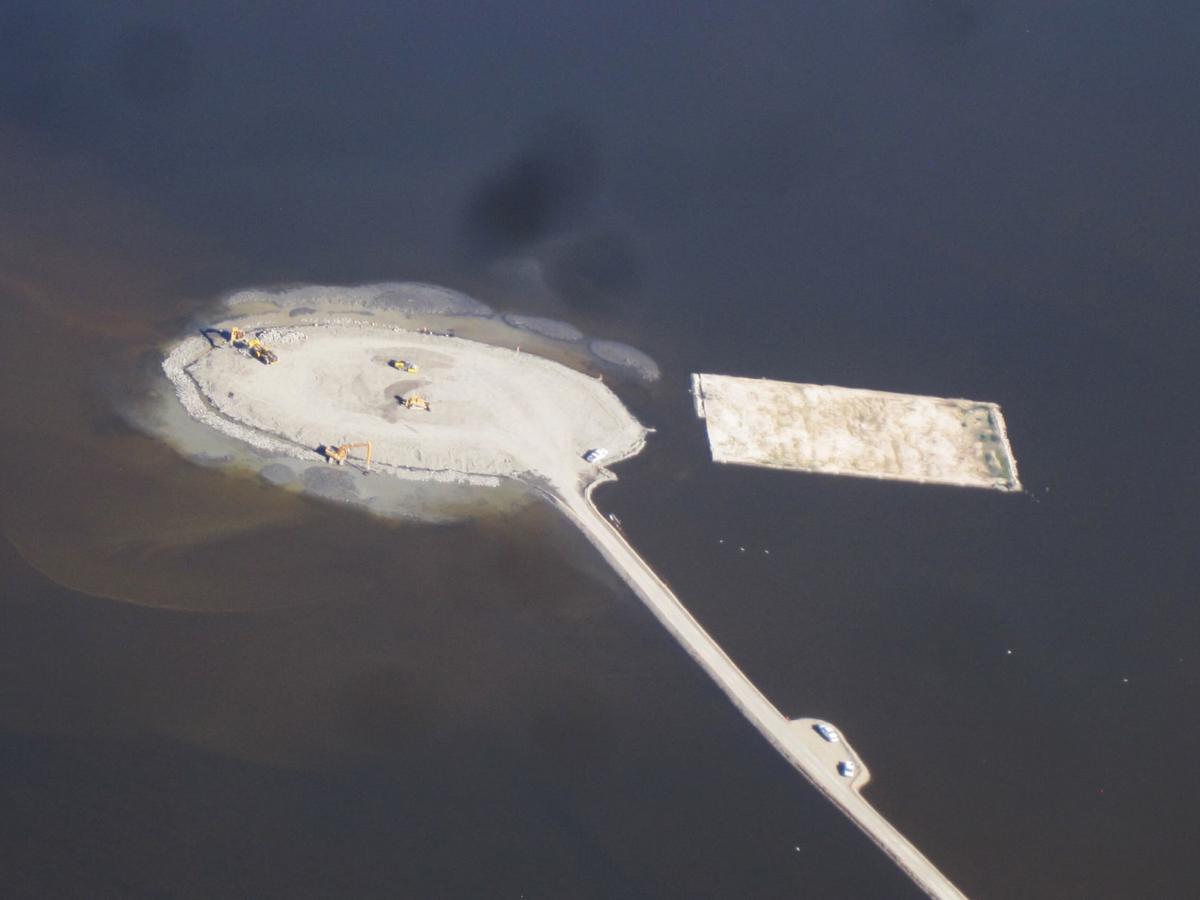
Lower Klamath Wildlife Refuge - Floating Islands Enhance Salmonid Recovery by Creating Alternative Nesting Habitat for Caspian Terns, US Army Corp of Engineers, US Fish and Wildlife Service, and NOAA Fisheries plan succeeded, with OSU and USGS, to bring fish predators to Klamath Basin. Floating Island International 2010, posted to KBC 6/13/13. "In February 2010, FIW and Just Buckets built and launched a 40,000sq. ft. floating island at Sheepy Lake in Lower Klamath National Wildlife Refuge." (The fish-predator Caspian Terns population in 2010 went from 0 to 325 in 3 months on Lower Klamath.) "This innovative island has been a tremendous success, as the Sheepy Lake tern colony appears to have had the highest nesting success of any Caspian tern colony in the region during 2010."
RELATED ARTICLE: Stimulus funds bring Caspian tern project to Siskiyou County, Siskyou Daily News 8/12/09. "...the Tulelake reserve rock island’s cost is approximately $1.1 million, the Orems unit rock island’s cost is approximately $650,000 and the Sheepy Lake floating island’s cost is approximately $2.3 million...an estimated colony of 10,000 nesting pairs of Caspian terns on Rice Island in the Columbia River were consuming approximately 6 million to 25 million salmonid smolts per year, according to a 1999 USACE report." Water for the refuges: Spring diversions to the refuge are helping to attract wildlife, H&N, posted to KBC 7/10/12. KBC EDITOR: As we understand it, the refuges have lowest water priority. Historically this farmland was not without water; it was a huge navigable lake. So when our government allows our farms to have their deeded water, all the runoff goes into the refuges, then into the Klamath river. We pump our water out of the basin, diverting it uphill through a man-made tunnel into refuges then into the Klamath River, all at Klamath Project irrigators' expense, where it historically could not be diverted. Our NMFS biological opinion presently does not allow the lake to fill. When it reaches a certain level the BO mandates the water to go down the river, or in the case this year, directly from the lake into the refuges. This has created a shortage for the farmers, so money is being paid to farmers to fallow land, pump groundwater, or irrigate like crazy early so at certain dates they use no more water and get paid for not irrigating later in the year. When water goes directly to refuges that runoff does not go to the farms. Last winter, since our power rate has increased more than 2000%, farmers could not afford to pump the water as much as before, and normally Fish and Wildlife is not willing to pay for this water, from a historic close basin, to be pumped to benefit fish and wildlife. HERE for Klamath Basin Refuge Page and related articles. (Klamath Basin) Farmland lease bids hit new record, H&N 4/26/12.
ESA partially to blame for bird kill at refuges, Debbie Kliewer, H&N letter 4/7/12.
Water requested for refuges, 26 groups sign letter to Secretary Salazar to bring more water to wildlife refuges, Siskiyou Daily 3/30/12. “USFWS does not pay to pump the water through the mountain. Tulelake irrigators pay the entire cost, hundreds of thousands of dollars in power bills... if farms receive water, the (Tule Lake) refuge receives water...Buying-out water rights will dewater fields. Dewatering fields means that neighboring fields must use more water to irrigate. As we learned from the water shutoff in 2001, when fields and ditches go dry, our aquifer’s water level drops significantly...(KWUA director) Addington, whose group supports the Klamath settlement agreements that are part of the proposal to remove four dams on the river, said if those agreements were implemented their provisions would alleviate this problem." KBC editor: If the KBRA were in effect, according to KWAPA/Klamath Water and Power Agency director Holly Cannon, "What you're giving up is water to get affordable power...20-25%." When ask what the power rate will be, or if it will be lower than tariff rate, Cannon said, "We can't guarantee it." So Addington is partly correct because the KBRA does buy out water rights and downsize agriculture. However, when ag water is put into wetlands, it evaporates twice the water as used by intermittent sprinkling of crops, so it will not produce more water. Since tribes and environmental groups sued to multiply our power rate over 2000% and won, farmers are no longer able to afford power to pump water out of our closed basin as often into LK, water that historically never left the Tulelake basin. The blackmail of the KBRA was, if farm leaders sign onto the dam removal deal, those tribes and environmental groups (voting KBRA members) would agree to allow farmers an affordable power rate, and the feds would pay some of the costs to pump the water out of the closed basin into Lower Klamath refuge and Klamath River.
Leave it alone, H&N
letter by Henry Christiansen, past Tulelake refuge manager 9/8/04,
regarding Rep Earl Blumenauer's persistence in trying to eliminate
refuge farming, "...it
would take 162,800 acre-feet more water to flood the farm area than it
takes to farm it. At present, that amount of water isn't available and
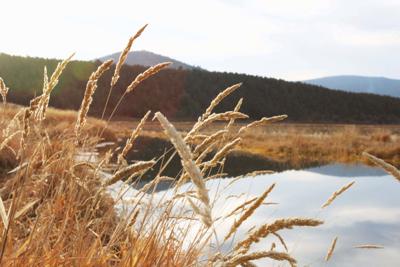
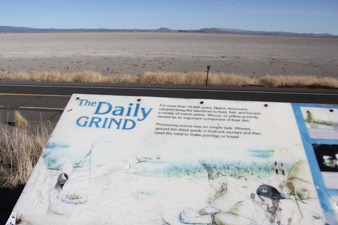
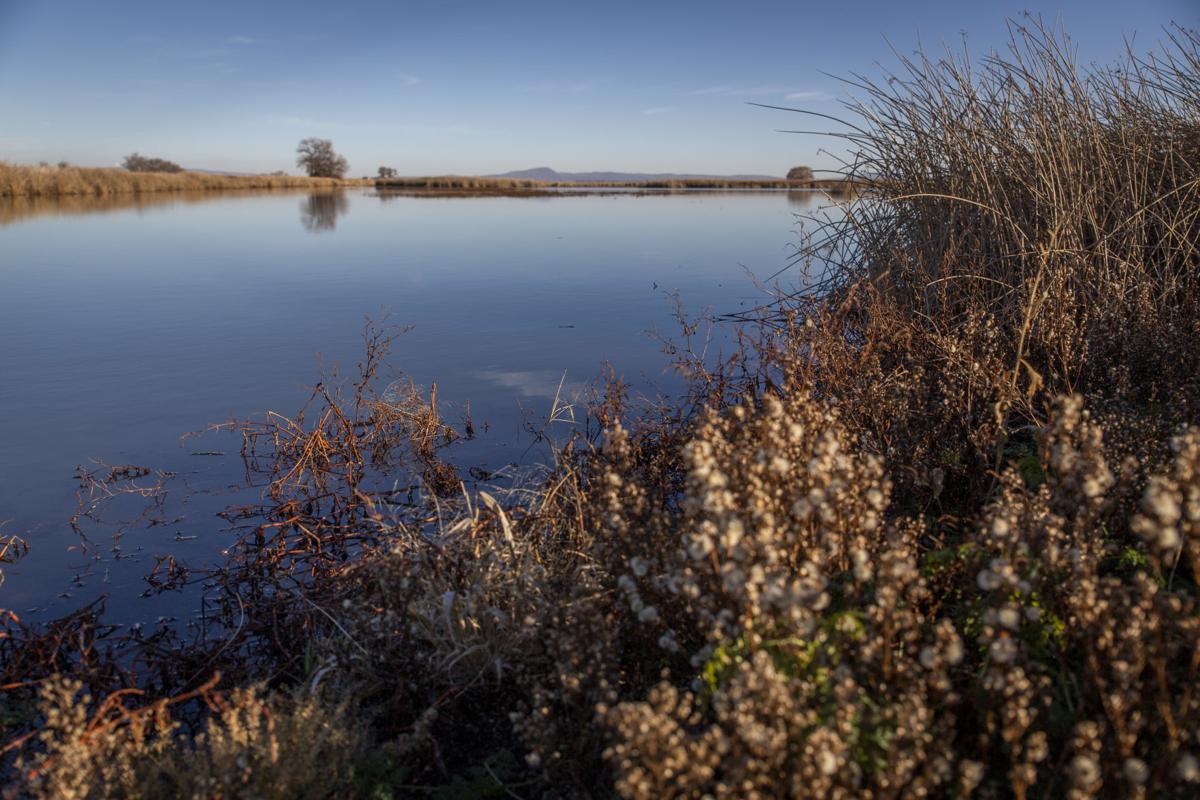
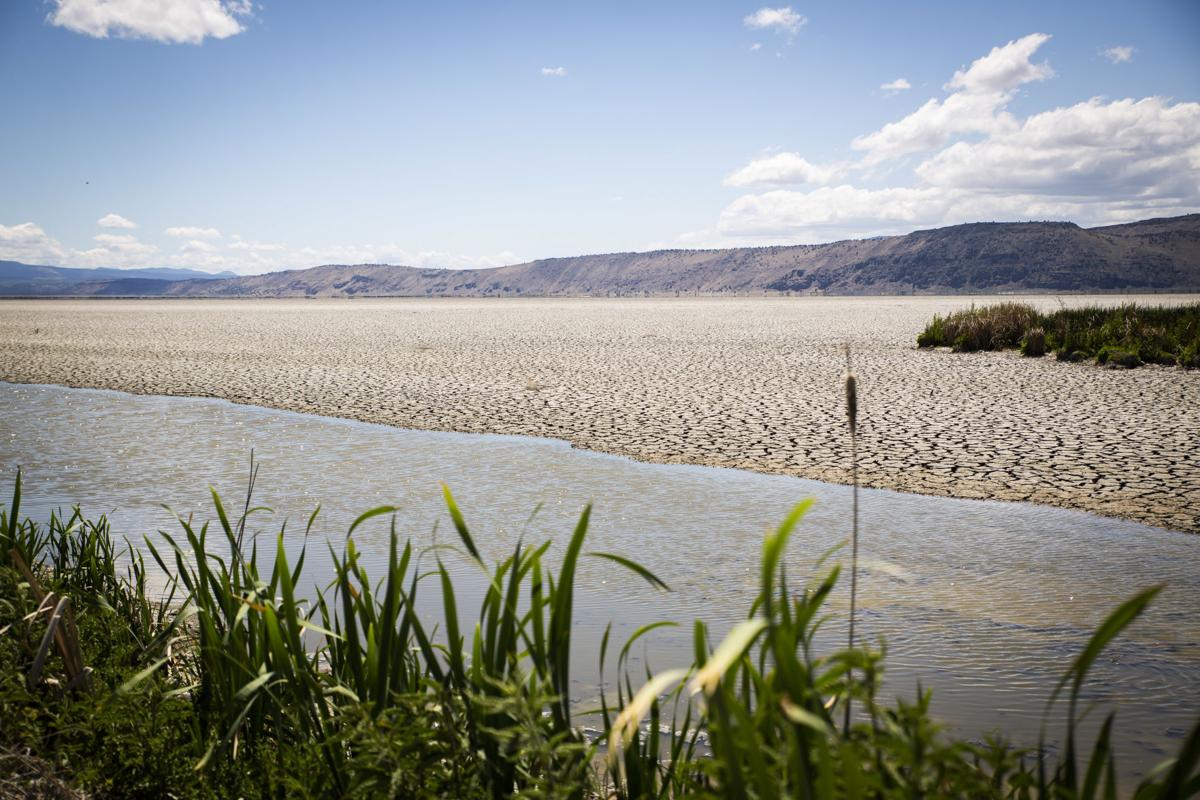
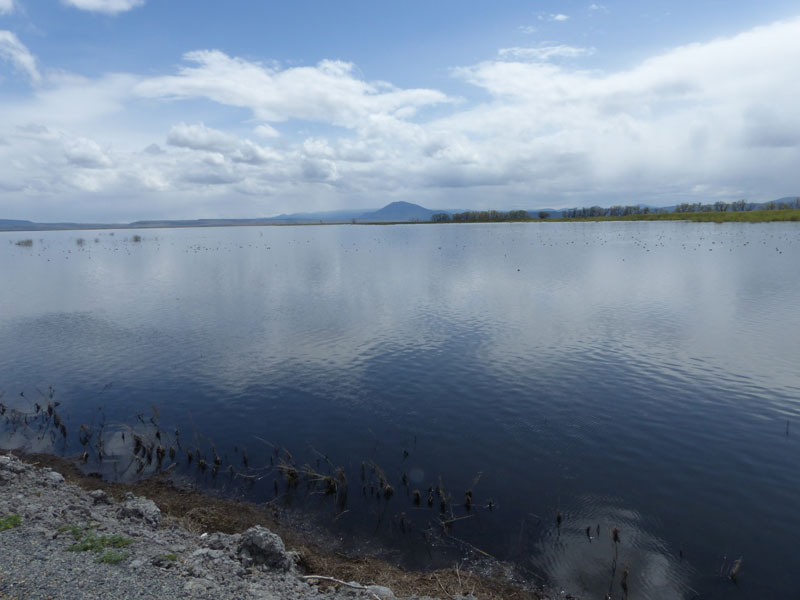
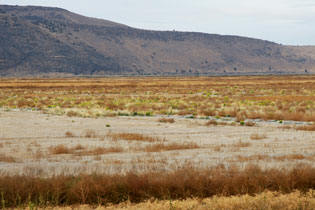
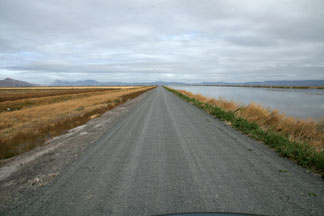
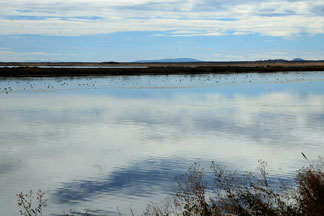
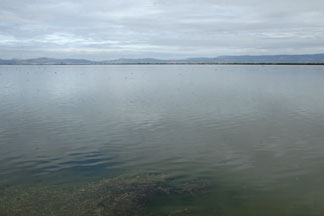
there isn't anything indicating it will ever be available." Ron Cole, Klamath Basin Refuge Manager, alerts Audubon groups that there is not enough water on refuges because farmers can't afford the power bills to pump it into the refuges and river on Feb. 10, posted 3/29/12 "To make matters worse, these commercially leased agricultural fields regularly receive water even in years when the refuge’s wetlands are, in stark contrast, left totally dry." KBC EDITOR: Check out these KBC photos below from fall 2010. Photo to left is dry dead fields. Center photo is farm leaseland on left and Tule Lake wildlife refuge on right. Photo on right is full Tule Lake.
KWUA newsletter regarding Buying out Irrigators 5/11/04 by director Dan Keppen, when environmental groups and USFWS promoted it before. ===================================================================== Geothermal energy plant planned for Klamath wildlife refuge, SBO, posted to KBC 3/29/12. "Take, for example, the Klamath Basin National Wildlife Refuge. The complex has been perpetually short on water in recent years and a jump in power costs in 2004 has made pumping water to replenish wetlands prohibitively expensive....(Manager Ron Cole) estimates that in 2001 it cost 33 cents to pump an acre-foot of water onto the refuge. The cost to do the same to day is $9.20. 26 Organizations Sound Alarm on Klamath Water, Obama Administration Urged Not to Allow National Wildlife Refuges to Go Dry, Center for Biological Diversity Press Release, posted to KBC 3/29/12. 10,000 dead birds at refuges (from cholera), H&N, posted to KBC 3/29/12 Energy site work could begin later this year, Geothermal facility on refuge considered, H&N, posted to KBC 3/1/12. "Depending on volumes produced by the geothermal wells, Cole said the refuge complex could meet all or part of those power needs and provide water to parched wetlands."
Interior Secretary Announces more than $20 Million for Wetlands Grants for Migratory Birds, 9/14/11. More than $9 Million for Wildlife Refuge Acquisitions April 22 public comment due on refuge draft plan Refuge employee (Dave Mauser) honored, biologist earns national award for wetlands program, H&N 3/18/11.“I think this award was not for perseverance but for the work I and a lot of others have done with the Walking Wetlands program,” he said, referring to the crop rotation program. In some years, the Walking Wetlands program has added upward of 10,000 acres of wetlands and spurred expansion of organic farming." HERE for more on refuges, and FWS intentions of land and water rights acquisitions. PUBLIC NOTICE - Tulelake National Wildlife Refuge Cooperative Farming, February 2011. KBC Note: 979 acres of private land will become seasonal wetlands, and growers will be provided land to farm in the wildlife refuge. Our federal government pays farmers to use efficient sprinklers, yet they want 979 acres of private land to have standing water much of the year. Pacific Region Selects New Assistant Regional Director for Refuges, FWS 2/9/11
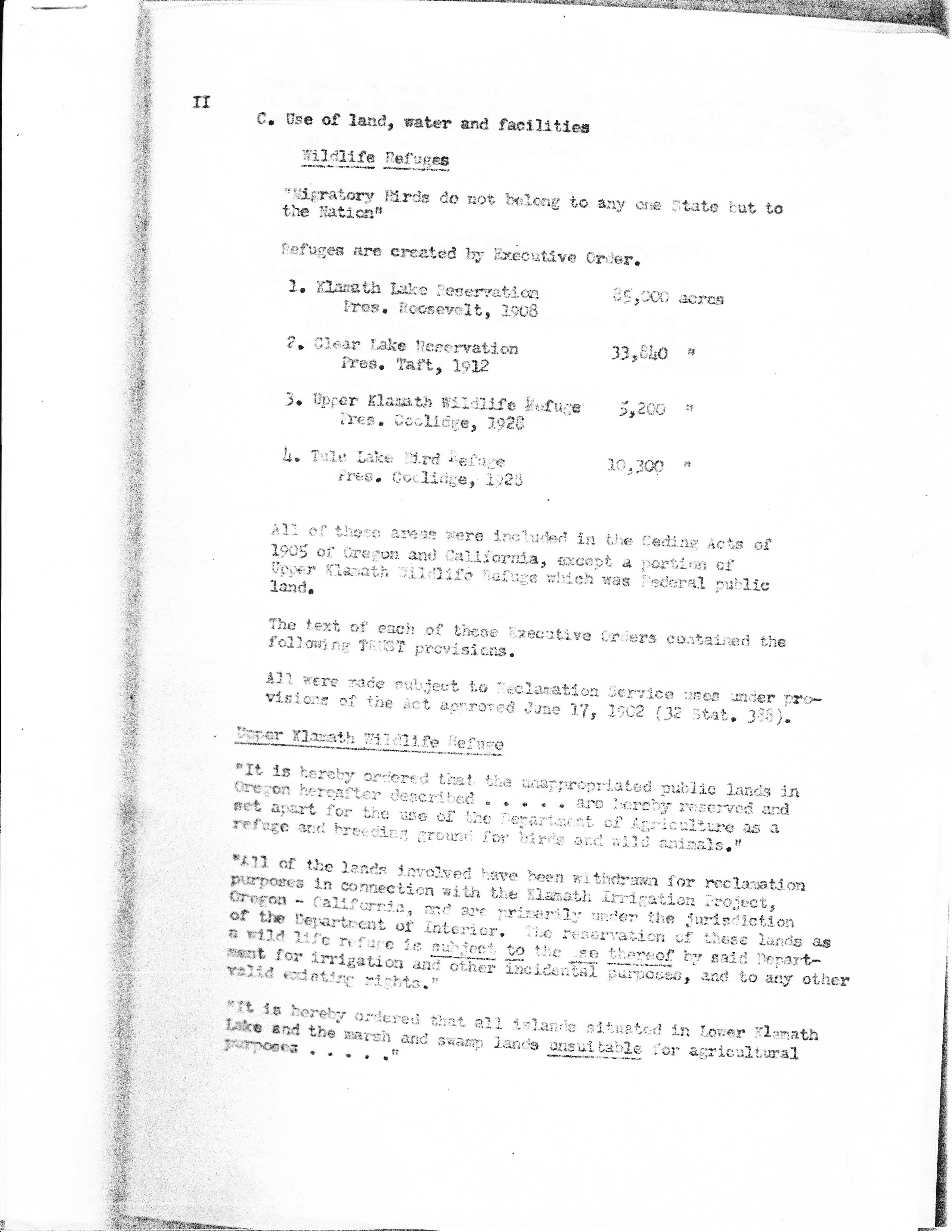
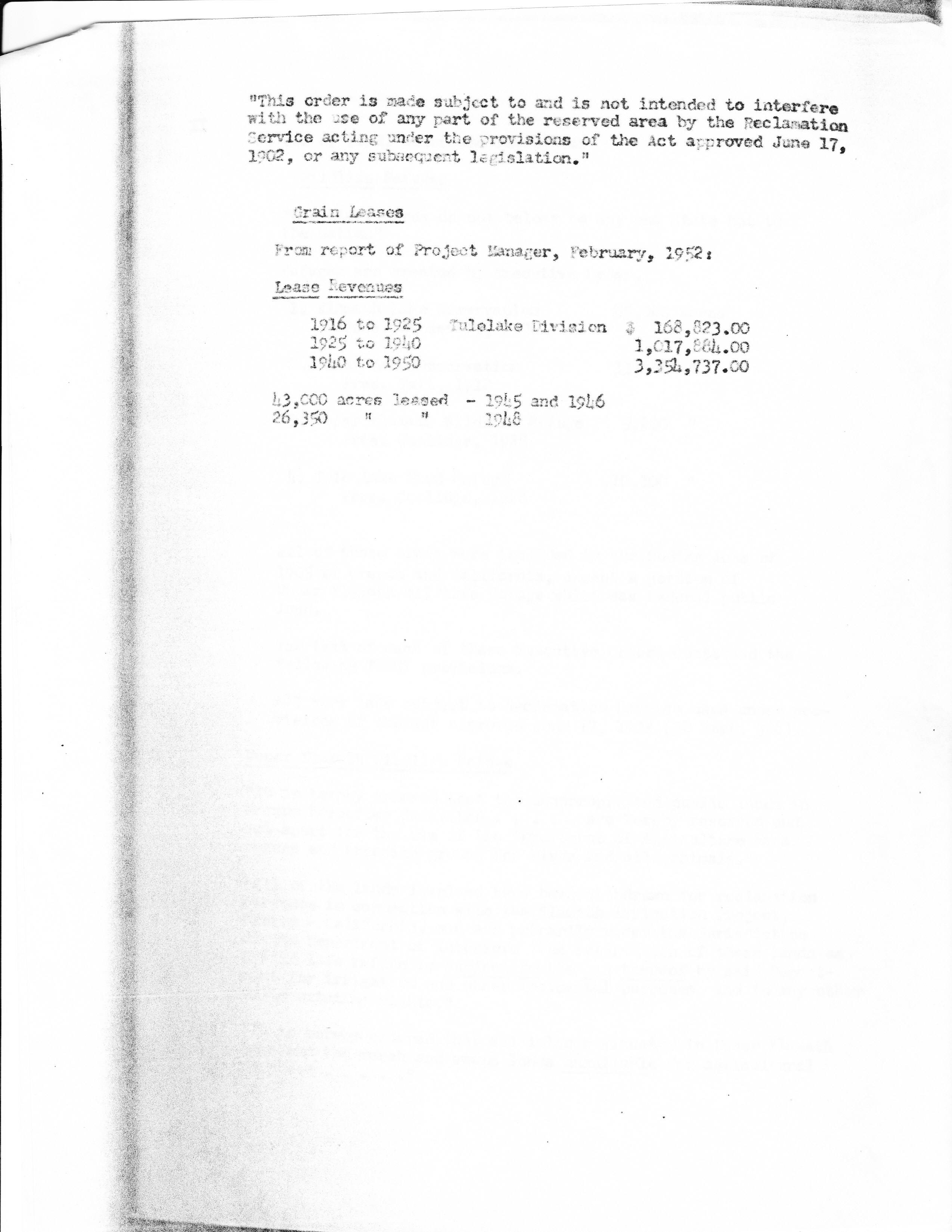
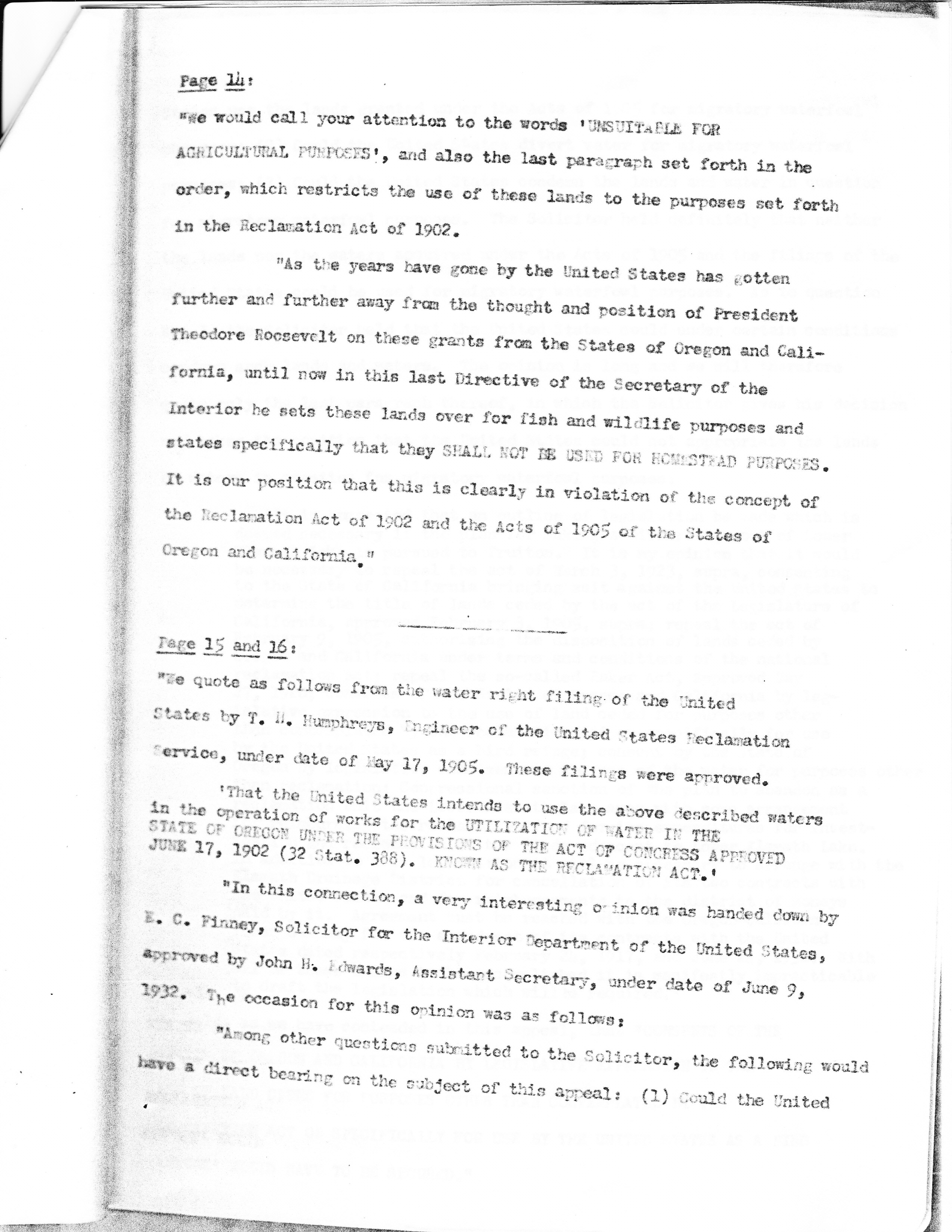
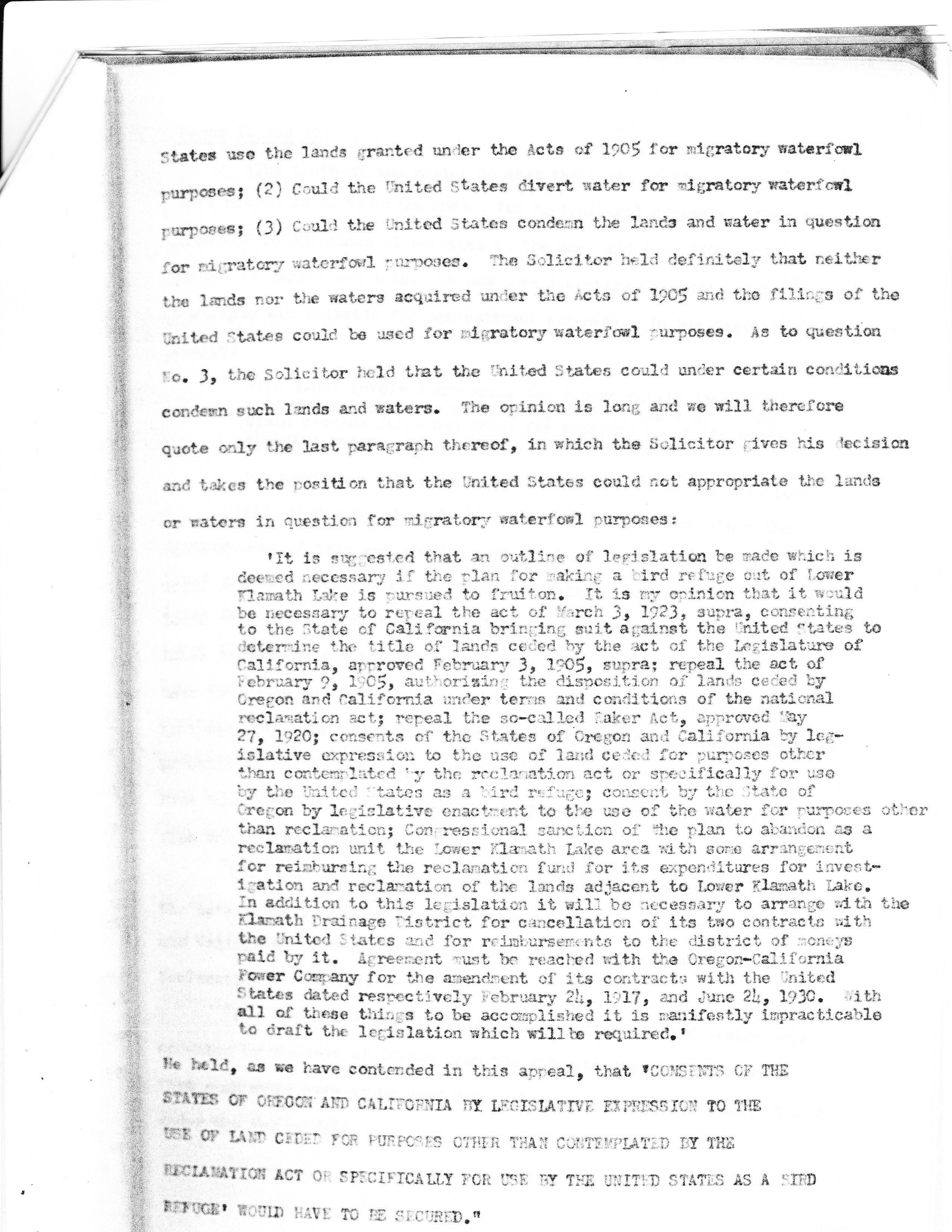
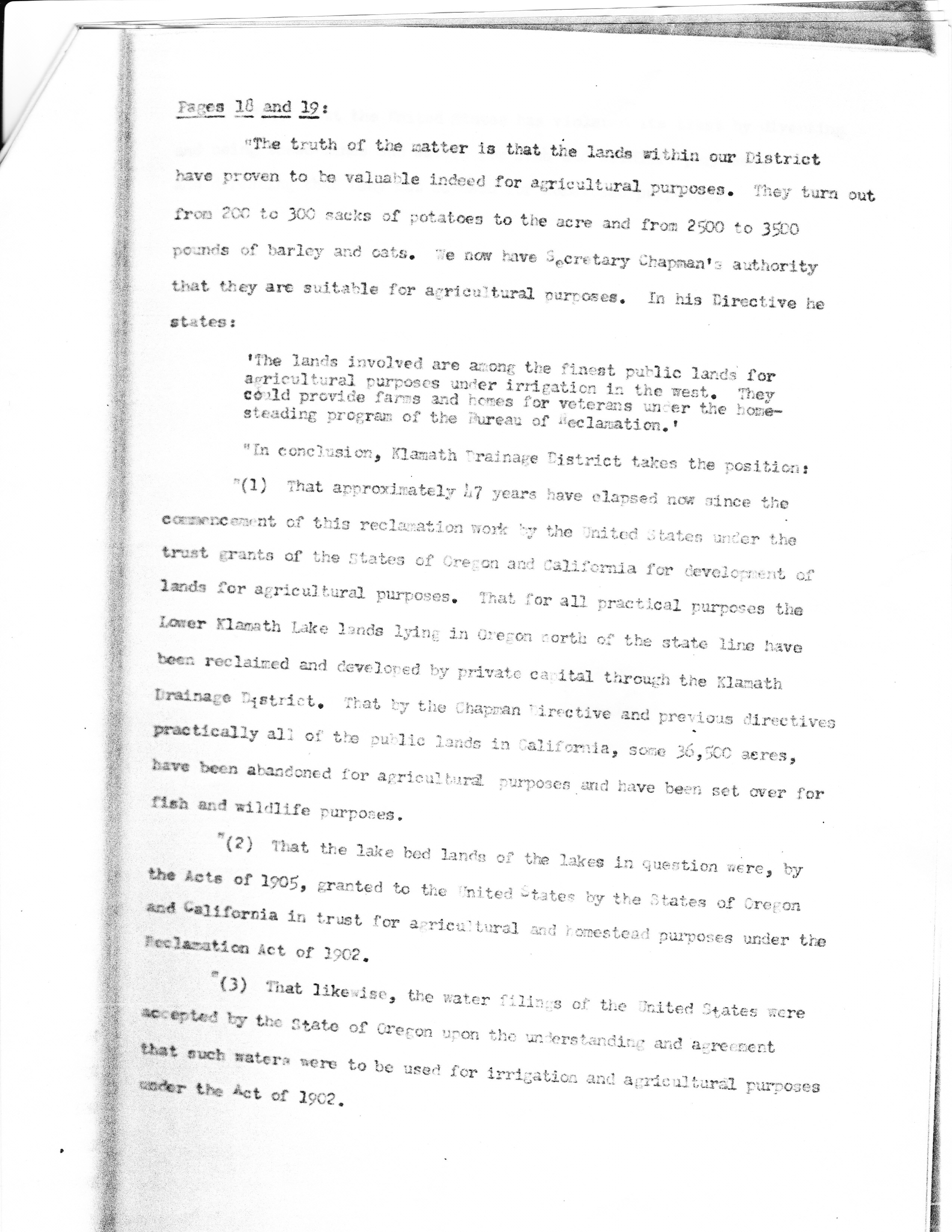
Oregon and California Wildlife
Refuges: appropriation for ag or
fish and wildlife early 1900's.
Page 1, &
Page 2 3/2/11 - Conserving the Future: Wildlife Refuges and the Next Generation, Draft Vision, 2011. Covers land acquisitions, farming, acquiring water rights, managing land outside the refuge, climate change, ... Draft Vision information page. Draft Recommendations. PRESS RELEASE: Salazar draft vision for future of refuges 2/24/11, "Spanning more than 150 million acres of land and water..."
Letter from Bureau of Reclamation Susan Fry to Ron Cole, Fish and Wildlife Tulelake Refuge Manager, regarding FWS takeover of leaseland management, posted 7/23/10. "Ron, I understand you held a meeting with Lease Land growers on July 14th and announced that FWS had “fired the Bureau” and would be taking over the lease land program. Since I have not heard from you regarding the lease land program since April/May, I am surprised to hear of this announcement..." Klamath Basin Refuge management public comment by June 28 Suckers being moved from (Tulelake) refuge to (Klamath) lake, H&N 5/13/10. "...We think most, if not all, of these (fish) originated in Upper Klamath Lake, so we’re just putting them back where they came from...”
Klamath Basin Refuges public meetings:
Klamath Falls May 13
Agreement guarantees refuges water, H&N 10/16/09. "(Cole)
defends the Endangered Species Act and the involved National
Environment Protection Act, which are often seen as
obstacles....“They allow citizens the right to work for
solutions, not to stop achieving solutions.” ! Walking Wetland Controversy, and Bureau of Reclamation blackmail issues, by KBC reporter July 19, 2009 Farming For Wildlife, The Nature Conservancy, 2009. "This grant will sponsor an informational trip by some of the participating farmers and other agricultural stakeholders in the Skagit Delta to Tule Lake National Wildlife Refuge in the Klamath Basin region of Northern California." Refuges receive stimulus money, H&N 5/19/09. "The stimulus money will be used to create a block of 1,300 acres that will be flooded for two years this fall. In 2010, the land will be returned to crops for three to five years." (Klamath Basin) Walking Wetlands, Iowa Public Television, posted to KBC 5/19/09. Tulelake refuge manager Ron Cole, and Tule Lake farmers Marshall Staunton and Rob Crawford, tell about the Walking Wetland program. From farms to wetlands; Walking Wetlands program benefits farmers, refuges and wildlife, H&N 11/20/08 From Farms to Wetlands, A partnership with agriculture, Herald and News 11/20/08 From farms to wetlands; Transforming tracts of farmland to wetland, Herald and News 11/20/08 Klamath Marsh event planned, H&N 6/9/08. "It originally had 16,400 acres but was expanded to 40,646 acres following purchases in 1990 and 1998. Of that acreage, 37,023 acres, or more than 90 percent, is in wetlands." (KBC NOTE: The Marsh was taken out of agriculture, decimating the cattle industry in the Upper Basin. It evaporates 2ce the water as irrigated ag, while the federal promise was, this federal acquisition would provide more irrigation water for the rest of the irrigators, somehow...Farmers and ranchers, who grew up with hand-shake contracts, fall for this line every time, to their demise. More than 100,000 acres in the Upper Basin have been converted from private ag land to federal standing-water swamps.) Wetlands-crop rotation paying off, H&N 6/5/08 Doing fowl deeds to fields, followed by Farms’ support of birds studied, H&N 4/24/08 Counting Birds, Annual Christmas count finds more than 100 different species, followed by Winter Wings, H&N 12/22/07 | |||||||||||||||||||||||||